IVF &
Natural Conception

IVF &
Natural Conception
Pursuing a Common Goal
Whether conceiving naturally or with the help of an assisted reproductive technology (ART) like IVF, hopeful parents all want one thing: a safe and successful live birth.
Unfortunately, human reproduction can be a remarkably inefficient process.17 It is estimated that 70% of all natural conceptions are lost prior to live birth.18
Natural Conception
Early pregnancy losses are a natural process that prevents embryos with severe structural malformations or chromosomal abnormalities, which are incompatible with life, from developing into viable pregnancies.18
About 90% of embryos that are naturally miscarried before eight weeks have chromosomal abnormalities, which shows that the body’s way of naturally selecting healthy embryos is very effective. Because of this, fewer than one in 1,000 women under 30 years old give birth to a baby with chromosomal abnormalities.19
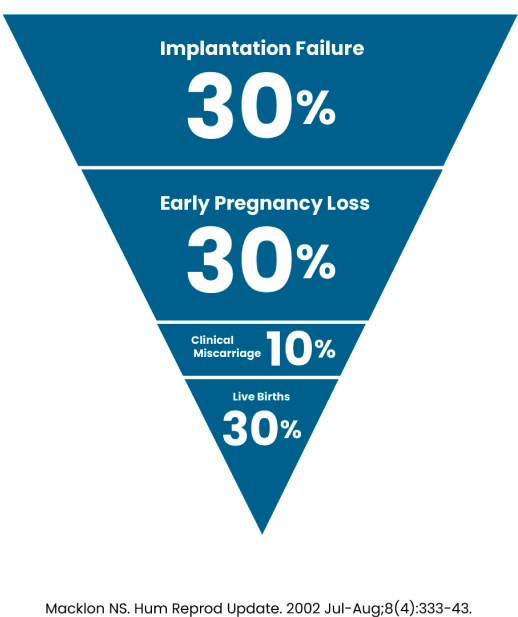
Embryo Loss in Natural Reproduction
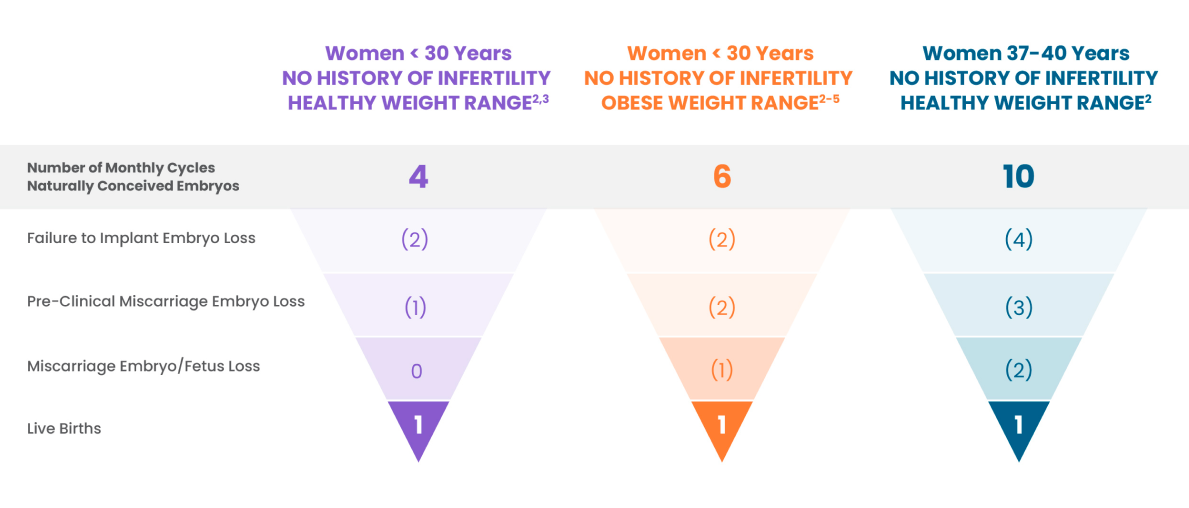
The odds of getting pregnant and staying pregnant depend on various factors, including age, obesity, and other lifestyle habits.20-24
In Vitro Fertilization 101
With in vitro fertilization (IVF), hopeful parents dealing with issues like infertility can often realize their dreams of starting or expanding their family.
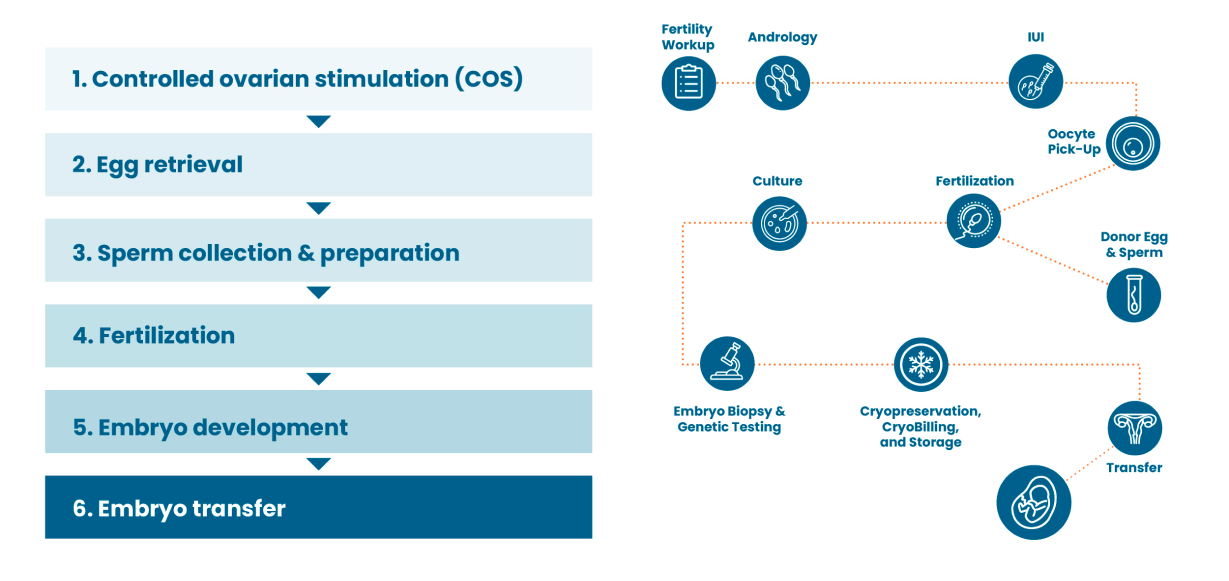
The IVF Process
During IVF, eggs are collected from the ovaries and fertilized by sperm in a regulated laboratory. The fertilized egg, now called an embryo, is then transferred back into the uterus with the hope that it will implant and develop into a successful pregnancy.25
Goal of IVF: Mimic Natural Conception
and Avoid Miscarriage
The techniques and testing used in IVF help improve embryo health by mimicking the body’s natural selection process, which reduces the chances of problems like embryo development issues, implantation failure, and miscarriage. 26
figure 1.
Women >35 Years
INFERTILITY DIAGNOSIS
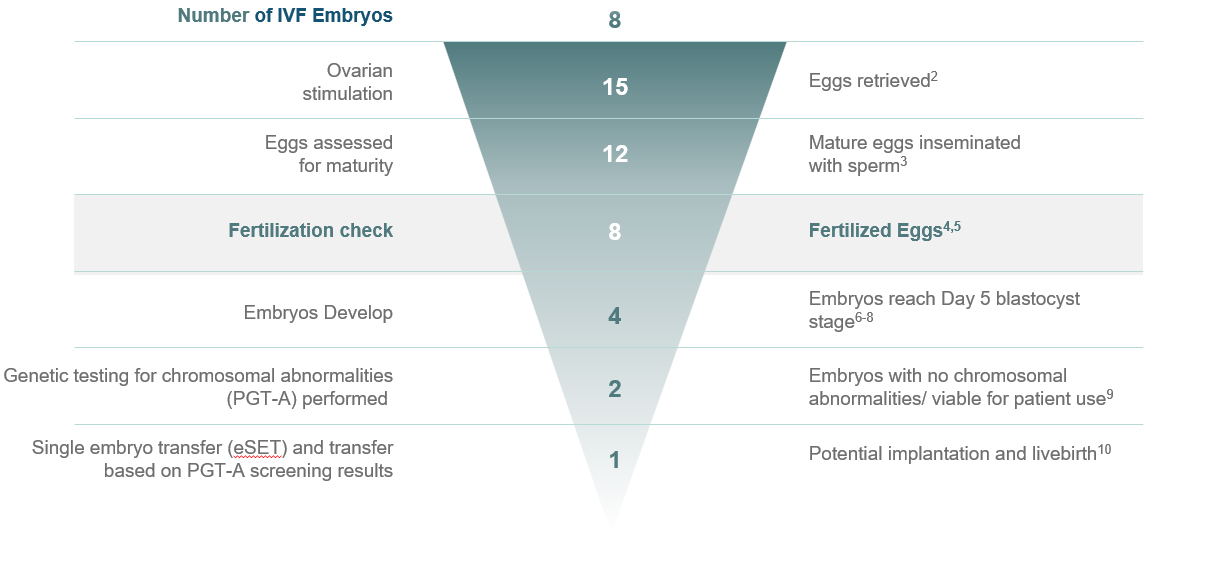
These references apply to figure 1 only.
2. Sunkara SK et al. Association between the number of eggs and live birth in IVF treatment: an analysis of 400 135 treatment cycles. Hum Reprod. 2011 Jul;26(7):1768-74.
3. Shu, Yimin et al. Fertilization, embryo development, and clinical outcome of immature oocytes from stimulated intracytoplasmic sperm injection cycles. Fertility and Sterility, Volume 87, Issue 5, 1022 – 1027
4. Sauerbrun-Cutler, M. T et al. (2020). Is intracytoplasmic sperm (ICSI) better than traditional in vitro fertilization (IVF): confirmation of higher blastocyst rates per oocyte using a split insemination design. Journal of assisted reproduction and genetics, 37(7), 1661–1667.
5. Zander-Fox, D., et al. (2021). PIEZO-ICSI increases fertilization rates compared with standard ICSI: a prospective cohort study. Reproductive biomedicine online, 43(3), 404–412.
6. Garbhini PG, et al. Day-3 vs. Day-5 fresh embryo transfer. JBRA Assist Reprod. 2023 Jun 22;27(2):163-168.
7. Coskun S, et al. Day 5 versus day 3 embryo transfer: a controlled randomized trial, Human Reproduction, Volume 15, Issue 9, (1947–1952)
8. Glujovsky D, et al. Cleavage‐stage versus blastocyst‐stage embryo transfer in assisted reproductive technology. Cochrane Database of Systematic Reviews 2022, Issue 5.
9. Greco E, et al. Where We Are Today. International Journal of Molecular Sciences. 2020; 21(12):4381.
10. Simon, A. L et al. (2018). Pregnancy outcomes from more than 1,800 in vitro fertilization cycles with the use of 24-chromosome single-nucleotide polymorphism-based preimplantation genetic testing for aneuploidy. Fertility and sterility, 110(1), 113–121.
Fertility and Aging
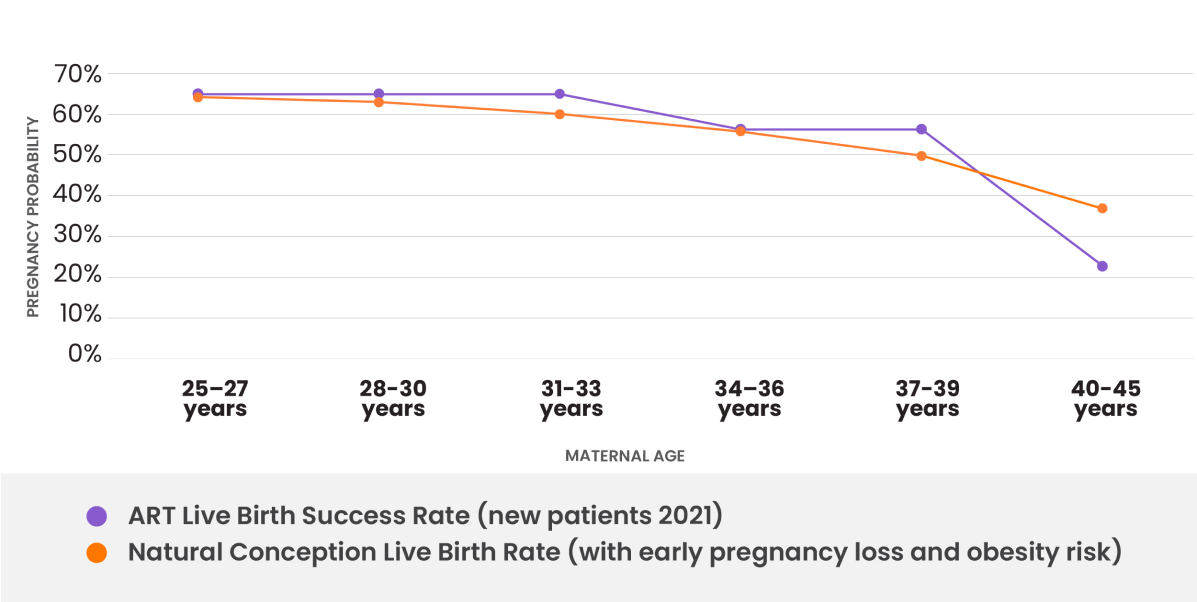
Female fertility starts declining at age 32 and decreases more rapidly after age 37.27 As women age, more embryos are needed to achieve a healthy embryo and a successful live birth. Increased maternal age raises the likelihood of embryos with abnormal chromosome numbers, which heightens the risk of miscarriage in both natural conception and IVF.28
Embryos Required to Achieve a Live
Birth by Maternal Age
Natural Conception vs. In Vitro Fertilization29,30
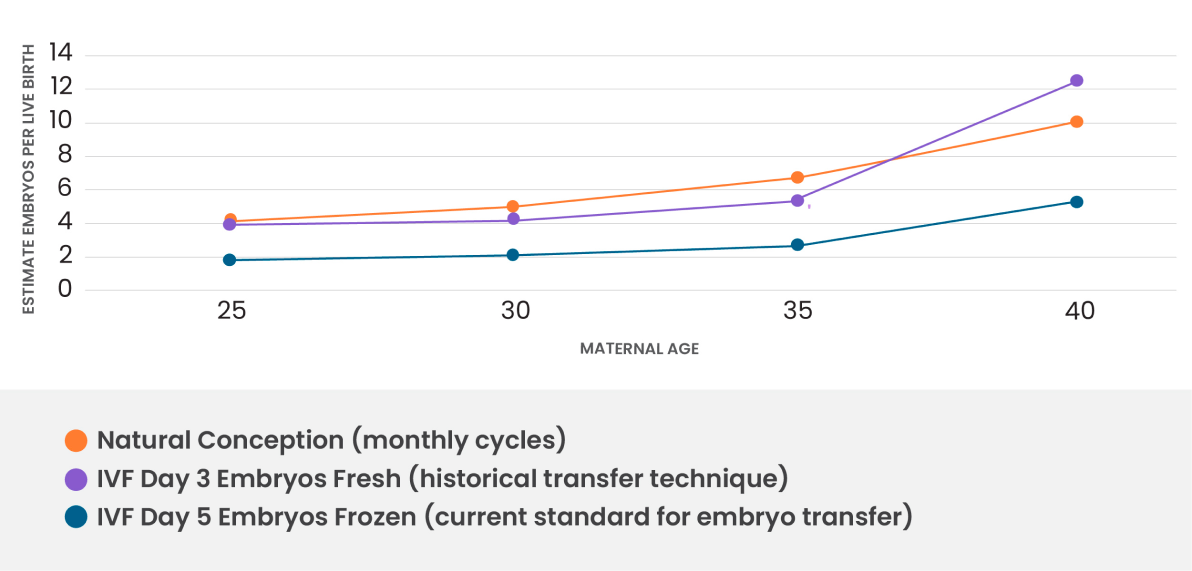
IVF has greatly advanced over the past three decades, primarily due to technological advancements in IVF. The live birth success rate of ART pregnancies now rivals natural conception when factoring in risks, thanks to improved embryo culture and selection, enabling elective single embryo transfer (eSET).31-34
Pregnancy Probability and Live Birth Success Rate by Age31-34